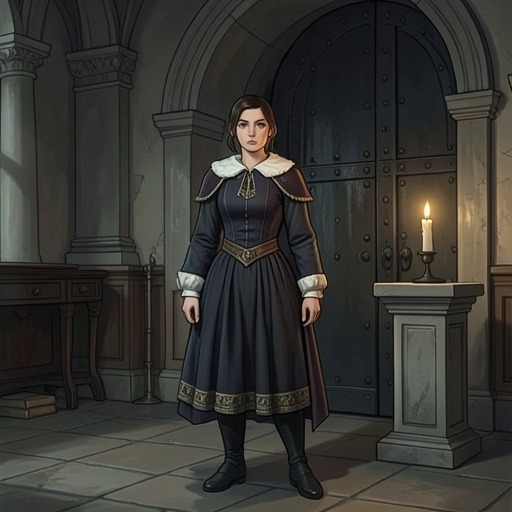
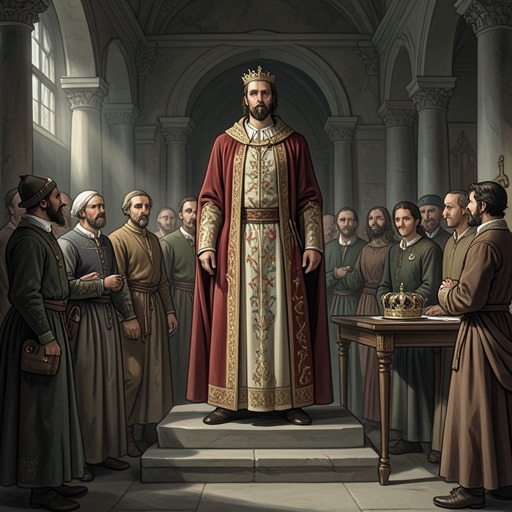
Catalina and Harry’s long-unfulfilled betrothal
The Constant PrincessCatalina and Harry Tudor’s long-unfulfilled betrothal was a dynastic promise that shaped Catalina’s life as a widow, a political bargaining piece, and, ultimately, Queen of England. Made in June 1503, it offered a route out of her precarious position after the death of Arthur, Prince of Wales. But the promise was never secure: financial demands, royal resistance, and questions about the marriage’s legal standing left Catalina waiting for years, while the same unresolved history later became central to the challenge against her marriage to Henry VIII.
A widow caught between marriage plans
After Arthur’s death, Catalina’s future was tied to competing claims over marriage, money, and her status as Dowager Princess of Wales. Henry VII proposed marriage to her, but she turned him down. A marriage between them also raised a question of affinity because she had been married to Henry’s elder son. Dr. de Puebla recognized that a papal dispensation might be needed; the claim that Arthur’s marriage to Catalina had not been consummated appeared to offer a way through that impediment, but a dispensation still depended on the consent and action of her parents. The ambassador warned that without their application to the Pope, no marriage could proceed.
The negotiations were inseparable from the dowry and Catalina’s means of support. Her mother’s instructions made her journey home conditional: if she was not pregnant, she was to remain where she had been placed until her next course, demand her jointure, and sail for Spain only after receiving the full amount. If she was pregnant, her parents were to seek immediate cash payment of the dowry and secure her allowance as Dowager Princess of Wales. The ambassador explained that her jointure amounted to a third of the revenues of Wales, Cornwall, and Chester, while her parents were also asking Henry VII to return her dowry. Catalina doubted that he would pay either the sums or the revenues. In her view, he had failed to provide her allowance even while Arthur was alive; with no advantage to gain, she could see little reason to expect him to honor the contract now.
The dispute already threatened her standing at court. When Harry Tudor was declared Prince of Wales in 1504, Catalina was not invested as princess alongside him, and their betrothal was not publicly confirmed. The ambassador suggested that the English were waiting for the dowry payment. Catalina knew that some of her plate had already been spent and that, without her father’s contribution, she could not make up the difference. The title and marriage promise thus depended not only on personal consent but on negotiations over money and property that she did not control.
The June 1503 promise and its delay
At Whitehall in June 1503, Henry VII told his younger son that he was to be betrothed to Catalina of Aragon. He initially said that they would marry when Harry Tudor was fifteen, then changed the age to sixteen. The boy pointed out that Arthur, Prince of Wales, had been fifteen; the exchange exposed how little the child understood the political arrangement being made for him. The betrothal was a royal decision, shaped by the elder king’s purposes, rather than a promise Harry Tudor had negotiated for himself.
For Catalina, the announcement seemed to offer a future, but the expected recognition did not follow. She waited for Harry Tudor to reach the age at which the marriage might proceed, while the dowry dispute left her without leverage. Her mother wrote rarely, and Catalina experienced the silence as abandonment. In 1504, on the very day Catalina wrote asking her mother to reply, Isabella died; the letter never reached her. The loss deepened the isolation in which Catalina was already waiting for the English court to fulfill the promise.
The delay became a material hardship. Catalina described six years of waiting, from the age of seventeen to twenty-three, as a period of confinement and powerlessness. She turned the panels of her gowns, sold jewels for food, and parted with her gold plate piece by piece to feed her household. She understood that the plate was the king’s property and that each sale could postpone the wedding again, but she had no way to feed her people otherwise. The dowry that had helped obstruct the match became part of the means by which she survived its postponement.
Her position also narrowed within her own household. Catalina discovered that Doña Elvira was plotting against her father in favor of Juana and her husband, Philip, and dismissed her. The dismissal cost Catalina a companion and adviser at a time when she already felt friendless. Her decision shows how dynastic loyalties could cut across personal dependence: she would not ally with her sister’s cause against the King of Aragon, even though acting against Doña Elvira increased her isolation.
A promise called into question
When the dowry money was finally on its way, Catalina insisted that a prince had to honor a solemn betrothal made before a bishop and witnesses. The ambassador then disclosed a rumor that Harry Tudor might already have been released from his promise. He thought Henry VII had arranged it, perhaps through an oath that Harry Tudor had been too young, under duress, or unwilling to marry. The report was not presented as certain, but its implications overturned Catalina’s understanding of the preceding years: she had waited and sacrificed on the belief that the match remained binding, only to learn that it might already have been dissolved.
Catalina regarded the news as a betrayal and said that she had been fighting without an army, support, or even a cause. Yet the revelation did not make her abandon the promise. She maintained that she had made a solemn commitment herself. The distinction mattered: the political contract might have been challenged or withdrawn, but Catalina continued to treat her own oath as binding. Her constancy became a form of agency precisely where her formal power was limited.
In 1509, after Henry VII’s death, the balance changed. Harry Tudor, not yet eighteen, told the ambassador that he wanted his marriage to Catalina to take place as soon as possible. When the ambassador reported this to her, Catalina received the news with restraint rather than the emotional display he expected. He also said that the dowry plate would no longer be an obstacle. On 24 June 1509, she was crowned Queen Katherine of England beside the new king. The six-year wait ended not merely with a renewed promise but with the public ceremony of an anointed queen, the status she had long believed was her destiny.
The betrothal’s legal afterlife
The earlier question of consummation gave the proposed match its canon-law complication. If Catalina’s marriage to Arthur, Prince of Wales, had been consummated, affinity could impede her marriage to his brother; the assertion that it had not been consummated supported a different case, though the Spanish monarchs still had to seek a papal dispensation. The ambassador’s assurance that Catalina’s first marriage had not been consummated was therefore more than private testimony: it was part of the legal basis on which a new marriage could be pursued.
Years later, when Catalina entered the marriage tribunal convened over her marriage to Henry VIII, the history of the betrothal and her earlier marriage returned in a changed form. She had refused to recognize the court as legitimate, but entered when summoned. Her position placed the marriage to Arthur at the center of the case: she asserted that she had been Arthur’s wife and lover before she married Henry, while also acknowledging, in her own account, that her claim of virginity had been a lie. The novel thereby makes the earlier diplomatic assertion and the later courtroom stance part of a continuing struggle over who could define the marriage and what evidence would count.
The betrothal’s significance lies in this double legacy. For years it was a promise Catalina could neither enforce nor safely relinquish, its delay sustained by dynastic bargaining and financial dependence. Once fulfilled, it gave her the queenship she had awaited; later, the disputed legal history surrounding her first marriage became a weapon in the attempt to undo her second. The promise did not simply lead to a wedding. It bound together her survival, her political identity, and the public contest over the legitimacy of her marriage.